compliance · cubicle curtains · flame retardancy · theatrical fabrics
Fire Certificates for Fabric: NFPA 701, CAN/ULC-S109, Title 19
What NFPA 701, CAN/ULC-S109, and California Title 19 mean on a fabric flame certificate, how IFR differs from treated FR, and what to ask for when you buy.

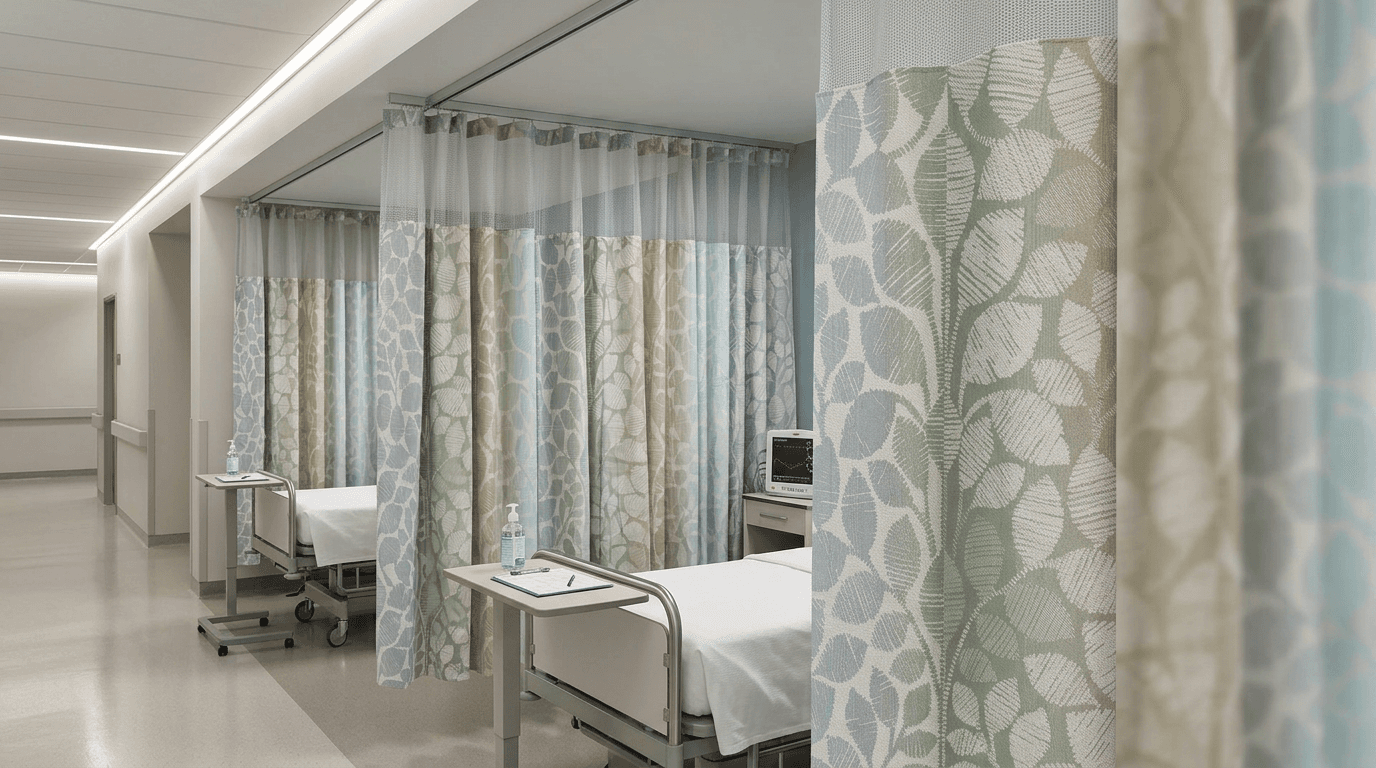
Before stage drapery goes up in an auditorium, or a cubicle curtain track is loaded in a patient wing, someone asks for the same piece of paper: the flame certificate. The request may come from a fire marshal, an insurance carrier, a general contractor, or a facilities office, and it can hold up an installation that is otherwise finished.
The paperwork is less mysterious than it looks. Most certificates for drapery and hanging textiles in North America reference one or more of three names: NFPA 701, CAN/ULC-S109, and California Title 19. Here is what each means in practice, and what to ask for when you buy fabric.
Why the certificate exists
Fire codes in most jurisdictions restrict what may hang vertically in a public space: stage curtains, masking, cycloramas, window treatments, cubicle curtains. A hanging textile presents a large surface to open air, so codes require that it resist propagating flame, and the certificate is the documentation trail. It tells the authority having jurisdiction (AHJ), usually your local fire marshal, that the specific fabric was tested to a recognized standard.
Enforcement is local. The fire marshal decides which standard applies to your occupancy, how current the paperwork must be, and whether any field verification is required. Those details vary by jurisdiction and change over time, so confirm them before you order fabric, not after the curtains are hung.
The three names, in plain terms
NFPA 701
The standard most commonly cited in the United States for flame propagation of curtains, draperies, and other hanging textiles. When a US venue or facility asks for "the FR cert," this is usually the document they mean. A passing result indicates the fabric resisted spreading flame under the standard's test conditions.
CAN/ULC-S109
The Canadian counterpart, covering flame tests of flame-resistant fabrics and films. Canadian theaters, schools, and healthcare facilities reference it the way US buyers reference NFPA 701, and cross-border productions often need paperwork for both.
California Title 19
California State Fire Marshal requirements, published in Title 19 of the state's regulations. California runs its own program for flame-retardant fabrics, so projects in the state should expect the AHJ to ask for Title 19 documentation specifically, not only NFPA 701.
Deliberately absent here: test geometries, pass criteria, and edition years. Standards are revised, and the version your project must meet is a decision for your fire marshal, not for a supplier's journal. Ask the marshal what applies, then ask your supplier for the matching certificate.
IFR versus topically treated FR
Fabric earns a certificate in one of two ways, and the difference matters over the life of the goods.
- Inherently flame retardant (IFR). The flame resistance is built into the molecular structure of the fiber rather than applied as a topical treatment, so it does not wash out or wear off. Most modern stage goods and healthcare cubicle fabrics are IFR or FR polyester for this reason. Prism Velour, an IFR polyester knit velour, 62 inches wide and offered in 15 oz and 22 oz weights, is a typical stage example. On the healthcare side, Crash Linen, an FR polyester dobby weave 54 inches wide, passes NFPA 701 and is built to come through repeated industrial laundering.
- Topically treated FR. A flame-retardant finish is applied to a fabric, often a natural fiber such as cotton, that is not flame resistant on its own. Treated goods certify and serve well, but the treatment is a finish: laundering, wet cleaning, humidity, and time degrade it, and many jurisdictions expect periodic retreatment or recertification. Keep the certificate with your maintenance records, and direct retreatment questions to your workroom, fabricator, or a flameproofing service.
The practical rule: anything laundered on a schedule, cubicle curtains above all, should be woven from IFR or FR fiber. For stage drapery that hangs for years, IFR avoids the retreatment cycle entirely.
How Fred Krieger Fabrics handles it
We are a fabric supplier. We sell fabric by the yard and by the bolt to theaters, schools, production companies, hospitals, and drapery workrooms. Our business is the cloth, so construction and installation questions belong with your workroom or fabricator. What we do supply is the paperwork: for the certified fabrics in our line, flame-retardant certificates for NFPA 701, CAN/ULC-S109, and California Title 19 are supplied on request.
The workflow is simple. When you request a quote, name the fabric, tell us which standard your fire marshal references, and ask for the certificate with the order. Browse flame-retardant and IFR fabrics for the cross-catalog view, or start from theatrical fabrics if you are dressing a stage.
Free sample cards and specs are available on request, and quotes cover volume pricing and made-to-measure questions. Contact us with the fabric name and your jurisdiction's requirement, and we will send the matching certificate.