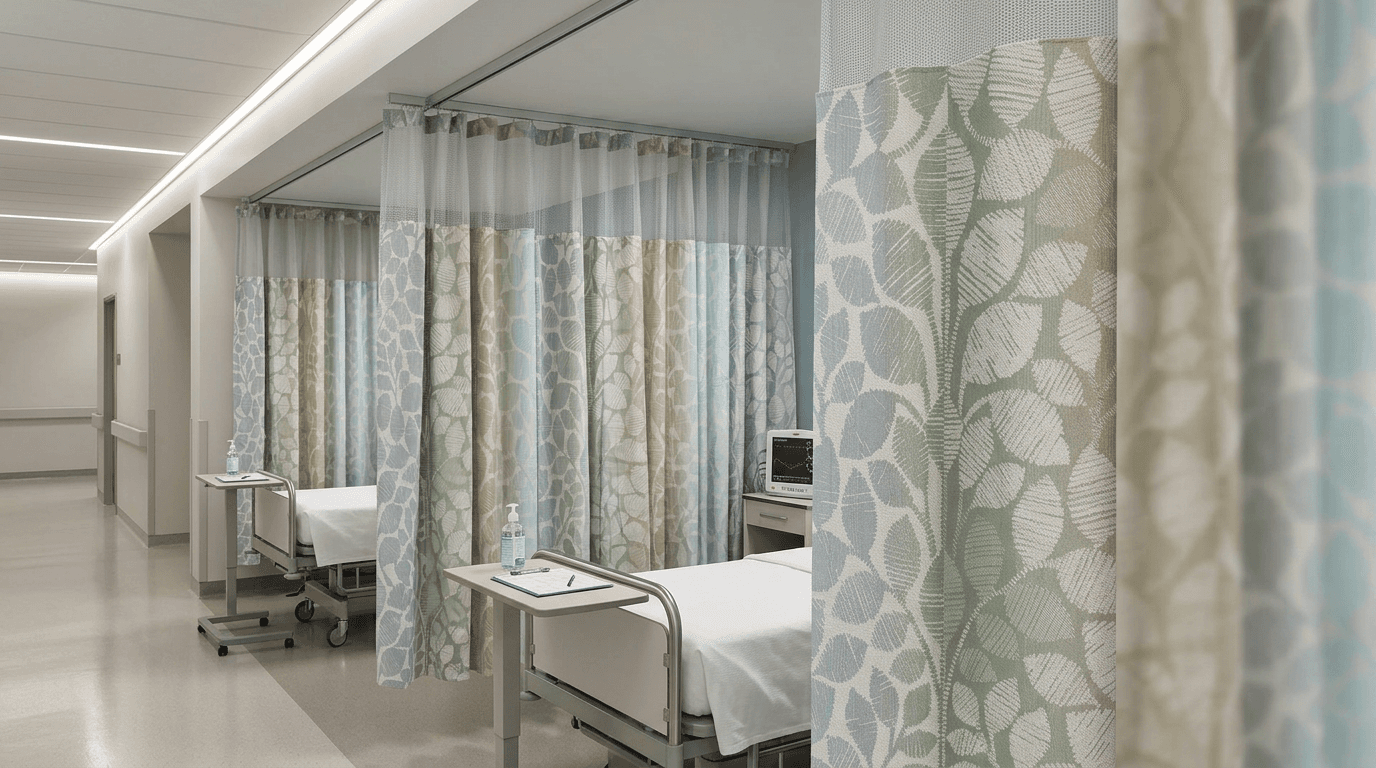
cubicle curtains · healthcare fabrics · specification guide
Specifying Hospital Cubicle Curtain Fabric: A Working Checklist
A working checklist for facility managers specifying cubicle curtain fabric: FR fiber content, widths, laundering durability, recycled options, and sampling.

A cubicle curtain lives a harder life than almost any other textile in a building. It is handled constantly, gripped with gloved hands, laundered at high temperature, and expected to look presentable in front of patients the whole time. Specifying the cloth well at the start costs far less than replacing panels that faded, shrank, or failed a fire marshal's paperwork check.
This checklist covers the questions we hear most often from facility managers and healthcare designers working through our hospital cubicle curtain fabrics. It concerns the cloth only: Fred Krieger Fabrics supplies fabric by the yard and by the bolt, and your drapery workroom or curtain fabricator handles panel construction, mesh headers, snaps, and installation.
Confirm flame-retardant fiber content
Every pattern in the line includes flame-retardant (FR) or inherently flame-retardant (IFR) polyester in its fiber content, and several patterns blend it with standard or recycled polyester, so confirm the exact fiber breakdown on each pattern's spec sheet. IFR fiber carries its flame resistance in the polymer itself rather than as a topical treatment, so the property is not something laundering can wash out. Ask your authority having jurisdiction what documentation it expects. We supply flame-retardant certificates on request, covering NFPA 701, CAN/ULC-S109, and California Title 19, and that paperwork belongs in the facility's life-safety file before the curtains go up.
Plan around fabric width
Most patterns in the line run 72 inches wide, the practical standard for cubicle cloth: wider goods mean fewer vertical seams per panel and less fabrication labor. The exception is Crash Linen, a woven dobby in FR polyester that runs 54 inches wide and comes in nine colorways. Neither width is wrong, but the yardage math changes with it, so fix the width before you request quotes. Give your workroom the track lengths and drop heights and let it calculate seam placement and total yardage.
Specify for the laundry, not the showroom
Cubicle curtains are laundered industrially and wiped down with disinfectants far more often than any hospitality drapery. That is why this line favors woven jacquard and dobby constructions over printed cloth: the pattern is created by the weave itself, with color carried in the yarn, so it cannot crack, peel, or wash away the way a surface print can. Put the same question to every candidate fabric: will this pattern still read after years of high-temperature wash cycles and disinfection protocols? A woven pattern answers that structurally.
Weigh the recycled content options
If the project carries sustainability targets, the line includes documented options. Cirrus is a 72-inch woven jacquard in six colorways, blending 54 percent FR polyester with 24 percent post-consumer recycled polyester and 22 percent SEAQUAL recycled polyester recovered from marine plastic. Droplets and Falling Leaves are also 72-inch woven jacquards, each combining 53 percent FR polyester with 47 percent post-consumer recycled polyester. These are fiber-content facts you can cite directly in a sustainability submittal, and the spec sheets back them up.
Pediatric areas: pattern with a purpose
For children's units, Imagine integrates child-centric educational motifs directly into the jacquard weave rather than printing them on the surface. It is IFR polyester, 72 inches wide, in three colorways (Blue, Orange Ice, Turquoise). Because the motif is structural, it tolerates the same high-temperature laundering and disinfection as the rest of the line. The practical point: pediatric patterning does not have to mean a printed novelty cloth with a short service life.
Sample before you commit
A screen image is not a specification. Colorway names like Seafoam, Oatmeal, or Blue Mist tell you a color family, not a match against your wall paint and flooring. Request sample cards (they are free) and review them under the facility's actual lighting, which is rarely the daylight a monitor simulates. Circulate the card to infection control and to the laundry contractor as well. Both will have opinions, and it costs less to hear them before the purchase order than after.
Decide between yardage and bolts
We sell cubicle fabric both ways. Yardage suits a single-unit refresh or a fabricator cutting to a measured list. Full bolts suit facility-wide replacement programs and standing inventory for a curtain rotation schedule, where spare panels are stocked so curtains can be swapped out and laundered on cycle. Many fabrics ship from stock with zero-day lead times, and volume pricing is handled on quote. Bring us the pattern and the total yardage; bring your fabricator everything involving a needle, mesh, or track.
Free sample cards and spec sheets are available on request, and we quote both yardage and full-bolt orders. Contact us to request samples or a quote.